
The method
What REBT is, and what it isn't.
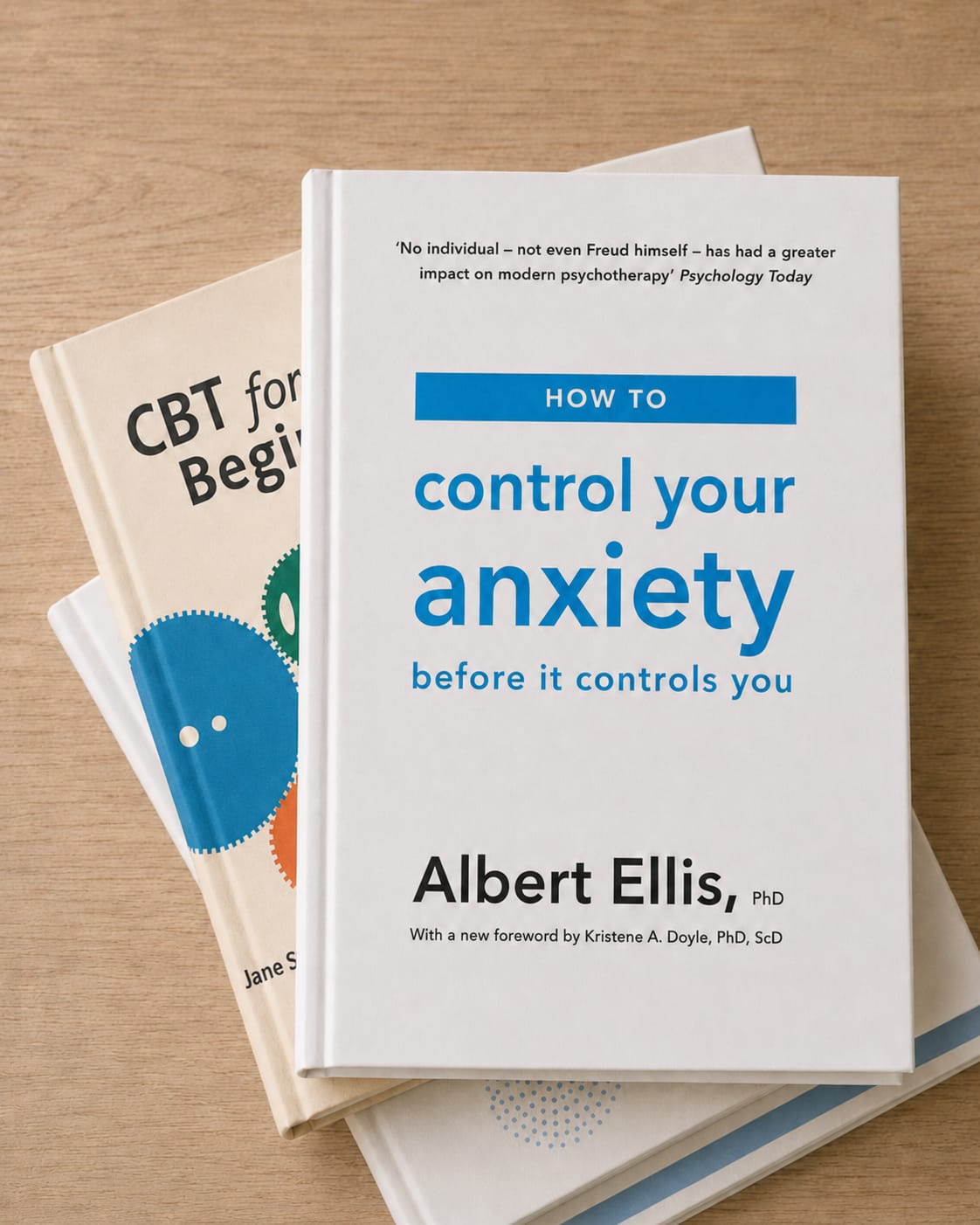
REBT, or Rational Emotive Behavior Therapy, is a structured, evidence-based form of psychotherapy developed by Albert Ellis. It focuses on the way our beliefs shape how we feel and respond to life.
The central idea is that emotional distress is not caused only by what happens to us, but also by the meaning we give to it. For example: “I must succeed,” “others must approve of me,” or “I cannot cope if things go wrong.”
In therapy, we identify these rigid beliefs and work on replacing them with more flexible, realistic ones. The goal is not to force positivity, but to build beliefs that are both honest and helpful, especially when life is difficult.
I am actively training in REBT through an affiliate of the Albert Ellis Institute, and this approach strongly informs the way I work.
“You don't need perfect thoughts; you need flexible ones.”
— Ioanna Darviri, MSc

Why I work this way
Why I practice REBT.
Many people come to therapy having already thought deeply about themselves. They may understand their patterns, know where they come from, and still feel stuck in the same emotional responses.
What drew me to REBT is that it does not stop at insight. It offers a clear method for working with beliefs: identifying them, questioning them honestly, and building more flexible alternatives that can hold up in real life.
For people who think a lot, structure is not cold. It can be grounding. It gives the work direction, and it helps change move from understanding into practice.
The process
Four steps, revisited as often as needed.
- 01
Assessment
We map what is happening: the situations that trigger distress, how you respond, what it costs you, and what you would like to be different.
- 02
Identifying core beliefs
Under recurring anxiety, self-criticism, or emotional overwhelm, there are often rigid beliefs or demands. We identify yours and name them clearly.
- 03
Challenging the beliefs
We examine these beliefs through logic, evidence, and usefulness. The aim is not to argue you out of your feelings, but to loosen the beliefs that keep distress going.
- 04
Behavioral change
New beliefs need practice. We design small, realistic steps between sessions so change begins to show up in your everyday life, not only in the therapy room.
Questions
Questions about the method.
Is REBT the same as CBT?
REBT is one of the earliest cognitive-behavioral therapies and influenced the development of CBT. While there is overlap, REBT focuses especially on the rigid beliefs and demands underneath distress, such as “I must,” “I can't stand this,” or “this means I'm not good enough.”
Will I get homework?
Yes, but small and agreed on together. It is never busywork. Usually, it is something to notice, practise, or try between sessions, so the work becomes part of real life.
Will we talk about my childhood?
When it is useful, yes. Patterns come from somewhere. But the work stays connected to the present, especially the beliefs and responses you carry now.
What if I disagree with you?
That is welcome. REBT depends on testing ideas honestly, including mine. You will never be expected to accept a reframe that does not feel true or useful.
Curious whether this way of working fits you?
The intro call is the easiest way to find out — fifteen minutes, free, and you'll get a feel for the approach firsthand.
15 minutes · free · online